Why Cats Get Aggressive During Grooming (Common Triggers Explained)
Grooming might seem straightforward to humans: brush, trim, wash, repeat. But as a cat—me, Thompson—I see things differently. Aggression during grooming isn’t “bad” behavior. It often signals a stress response with layers of fear, discomfort, and lingering memories. Plenty of cats hit their breaking point mid-groom, and the reasons aren’t always clear-cut. I’m here to walk you through the common triggers behind grooming aggression, so you can get a feel for what’s really going on inside a cat’s mind. Solutions and fixes are a whole separate topic; this is about figuring out what sparks that stress to begin with.
Why Grooming Overloads a Cat’s Senses
From the feline side, grooming can turn into a full-on sensory storm. My skin is loaded with tiny, sensitive nerve endings, and each swipe of the brush or comb tugs at my fur and tickles my whiskers. Some cats actually feel every stroke like an itch they just can’t get rid of, especially those with finer coats or bare spots.
Then there’s the sound. Clippers buzzing, scissors snipping, brushes dragging through fur—these sounds, although mild to humans, can be nerve-racking to cats. Try brushing close to my ears and you’ll see what happens: ears flatten, eyes widen, maybe the tail gives a hard flick.
Smells pile on too. Human shampoos, perfumed wipes, even the barely-there plastic scent on a comb—cats notice all of it. Strong, unfamiliar scents mixed in with our natural fur odor can make even the chillest feline feel unsettled. Put all those sensations together—touch, sound, and strange smells—and it’s pretty obvious why some cats hit their stress threshold and melt down.
How Past Experiences Shape Grooming Fears
One bad grooming session can stick with a cat for life. If someone ever yanked out a mat from my fur or trimmed my nails too short, I’ll store those memories—what happened, where it was, which tool you grabbed. That imprint doesn’t fade quickly.
Being restrained while grooming only adds to the dread. Holding a cat tightly or pinning them when they’re nervous turns routine grooming into panic time. Next time you reach for that brush or use the same spot on the sofa, my brain races as all those memories pop in. My body tenses up, and defensive aggression isn’t far behind. For us, context is huge. Every rough session builds these connections, turning everyday brushing into a stressful event.
Loss of Control and Handling Triggers
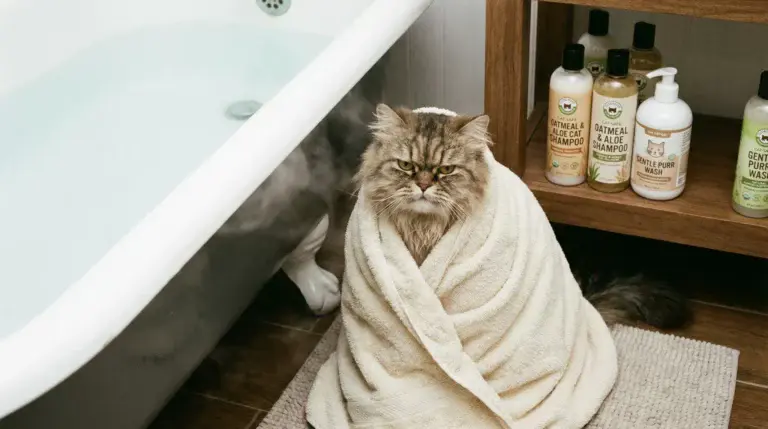
Cats thrive on having control over their bodies. The instant I feel trapped—held under your arm, squeezed too tight, or wrapped in a towel—my panic mode hits hard. Defensive aggression becomes a last warning: let go now!
Some cats tolerate gentle hugs, but even those can lose patience if grooming gets rough or lasts too long. There’s a big difference between being okay with touch and being scared of it. Handling tolerance means I’m cool with hands on me (for a bit). Handling fear means my nerves are already stretched thin and, if things go wrong, I’m likely to bite, scratch, or run. The more out-of-control I feel, the faster everything falls apart.
Physical Discomfort That Makes Grooming Painful
Sometimes a cat lashes out during grooming because it just plain hurts. Aggression here isn’t about being difficult—it’s how we say something’s wrong.
- Arthritis: Sore joints make picking up paws or stretching for a good belly brush tough. Lifting a leg or twisting to reach certain spots can spark pain and defensive swats or growling.
- Skin irritation or allergies: Sensitive patches, scabs, and rashes mean even soft brushes can feel rough or sting. Cats with allergies sometimes react before you even touch the spot.
- Matted fur: Mats yank on the skin with every move. Trying to pull them out in a rush just hurts more, so biting or scratching back is a way to defend ourselves.
- Dental pain: If my teeth hurt, any handling near my mouth, jaw, or cheeks is a hard no. That pain can show up suddenly for both of us.
Veterinarians often point out that sudden grooming aggression can be an early sign of pain or discomfort.
Timing Triggers: When Aggression Is More Likely
Not every moment is right for a feline touch-up. Catching a cat right after playtime, when their adrenaline’s still high, makes it easy to tip from fun to furious. The body’s amped up, and a few extra sensations can push stress over the top.
Interrupting a solid nap or outdoor watch session is risky. Cats need their downtime, and sudden handling in the middle of rest can bring out claws or teeth. High excitement—like a doorbell ringing or another pet storming in—ramps up the odds for big reactions. Bad timing even makes mellow cats lose their cool fast.
Personality and Tolerance: Every Cat Is Unique
No two cats handle grooming stress the same way. Some have a quick fuse and react immediately to the smallest irritant. Others last longer before reaching their limit. Age plays a big part. Kittens usually wiggle and squirm more, but get used to handling as they grow. Older cats tend to be less tolerant, especially if pain or trauma is part of their past.
A cat’s background shapes their reactions. Cats that grew up as strays or barely handled as kittens are usually more on edge than those who got used to gentle touch early. Even among litter mates, you’ll find some who snap quickly and others who only try to escape. It’s common for people to ask, “Why does my one cat take brushing so well, but the other goes wild?” The answer comes down to personality, history, and the amount of trust between cat and human.
Cats with ongoing stress or fear often have a much lower tolerance for grooming, which is why understanding cat anxiety treatment options can help explain why some cats react so strongly in these situations. In these cases, using calming aids designed specifically for grooming situations can help lower baseline stress before brushing even begins.
Recognizing Build-Up: Early Warning Signs
Cats rarely flip from calm to aggressive without giving off warning signals. If you pay attention, you’ll notice the signs as stress grows. Catching these cues lets you dodge total meltdowns (though actually handling them is another topic).
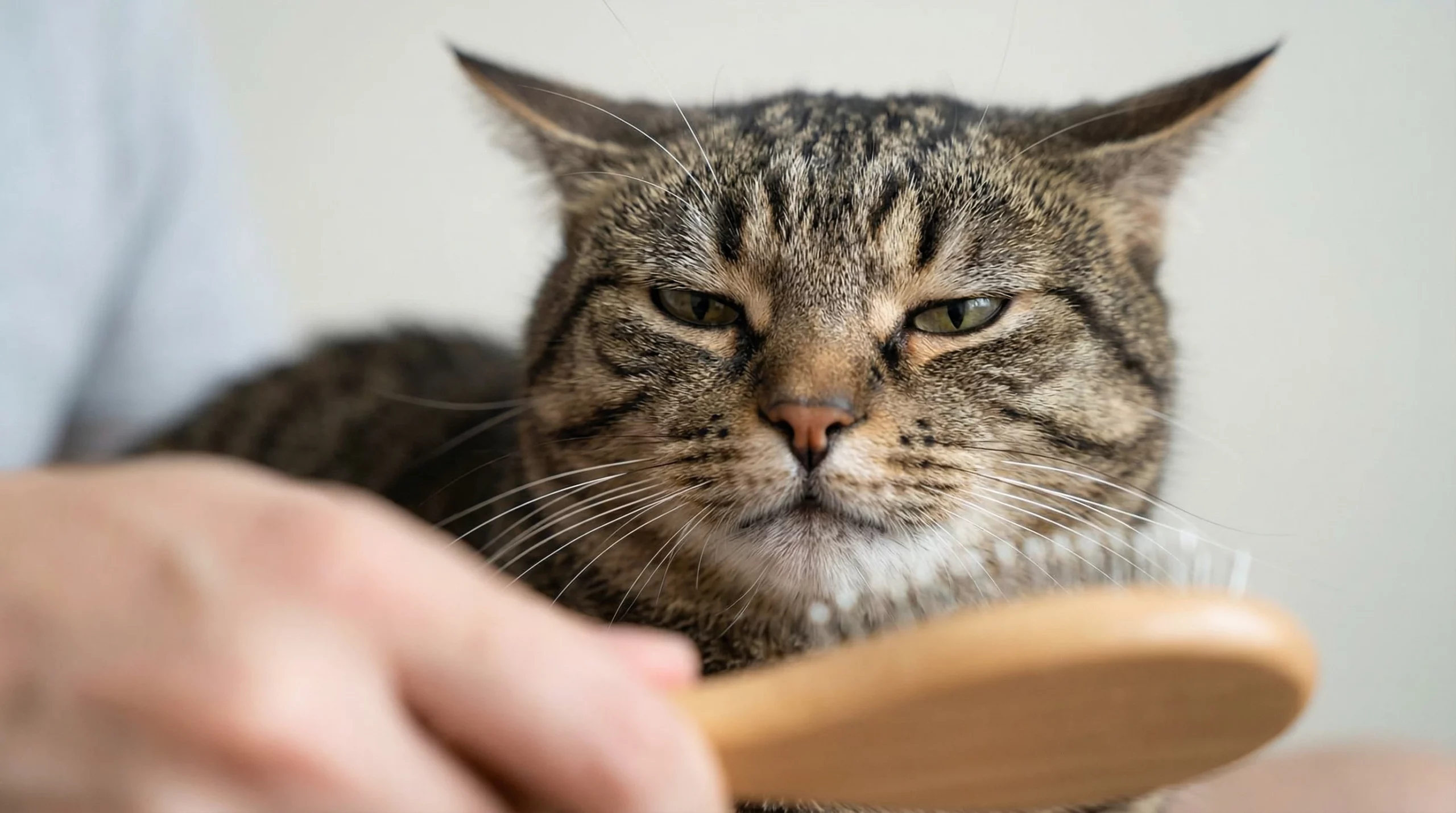
- Tail movement: Flicking, thrashing, or lashing tails mean stress is building. When the tail tip starts whipping, tension is on the rise.
- Ears: Ears upright to start, then flattening or turning back as agitation grows.
- Body tension: A stiff back, tucked or drawn-in paws, or low crouching signals discomfort.
- Freeze vs. flight: Freezing in place, rigid and wide-eyed, shows overload. Bolting in the middle of grooming is the most obvious “I’ve had enough!” sign.
Picking up on these signs means discomfort is adding up, and aggression could be next. Cats communicate discomfort long before they lash out, and learning to recognize these subtle signals is easier when you understand common feline behaviors like those explained in Top 10 Cat Communication Tips.
Why Ignoring the Triggers Makes Grooming Aggression Worse
Ignoring a cat’s warning signals only makes things spiral. Every stressful grooming session deepens the association: grooming equals danger. If a cat is swatting or biting and you push on, no matter how gently, the cycle tightens: fear rises, aggression builds, and the cat gets reactive faster. It’s a hard habit to break.
Once a cat figures grooming is always negative, rebuilding trust is tough work. Blowing past their signals doesn’t teach them to handle it; it simply proves that expressing their discomfort doesn’t work, so they resort to stronger responses like biting. It’s why some cats start out with a little tail flick or growl and end up in full panic mode, even during a brief brush-through.
When Understanding the Cause Is the First Step to Calming
Information is the starting line. Once you know what’s pushing your cat from “annoyed” to “aggressive,” you can start making changes to keep grooming calm for both of you. For hands-on tips, including how to handle a grooming session when your cat’s on edge, check out my article: How to Calm an Aggressive Cat During Grooming.
Cause-Focused FAQ
Why does my cat tolerate petting but not brushing?
Brushing introduces new sensations—like fur pulling and noise—that some cats just can’t stand, even if they adore gentle hands.
Why did grooming suddenly become aggressive?
Tolerance changes if a cat gets sore (joint pain or mats), forms negative associations (like a tough snag with a new brush), or becomes more sensitive with age.
Can grooming aggression come from anxiety alone?
Yes. Anxious cats have lower patience for new changes or sensations. Even a chill session might be too much if stress is already high.
Prevention Starts With Understanding
Grooming aggression isn’t defiance—it’s another way cats communicate. Keeping an eye out for signals and knowing your cat’s triggers makes the whole process safer and smoother. Once you know what sets your cat off, you’re on your way to calmer grooming sessions. Calming tips are in the article linked above, but noticing and respecting these triggers is always step one for cats like me.