Kitten Litter Training Tips: How To Get Your Kitten Using The Box Fast
Hi there, it’s Thompson. When it comes to being a happy kitten, learning where to “go” is one of the first big steps. Litter training might sound a little daunting (especially for those of you new to the kitten life), but it’s way more straightforward than you might think. I’ve picked up a bunch of paws-on experience, so you’ll get all my favorite tricks for helping kittens use the litter box quickly, and keep using it without drama. If your kitten seems stressed or confused during training, learning to read early cat behavior cues can make a big difference.
Litter Training Basics for Kittens
Kittens have a natural instinct to dig and bury their business. With a little encouragement, most kittens pick up litter box habits pretty fast. Still, a few smart choices and the right setup can make things go a lot smoother for everyone, including your furniture and shoes.
The main thing to keep in mind is that kittens are still learning about everything in their world, so patience and positive vibes will really pay off. Kittens under four weeks old may need help from their mom or a person, but by five or six weeks, they’re usually ready to learn how to use the box solo. Understanding how a kitten’s digestive system develops also helps explain why accidents happen early on.
Key Supplies for Litter Box Success
Having the proper litter box setup makes all the difference. Every kitten is unique, but I notice that the basics usually work for nearly every fuzzy student. Here’s what I recommend at the start:
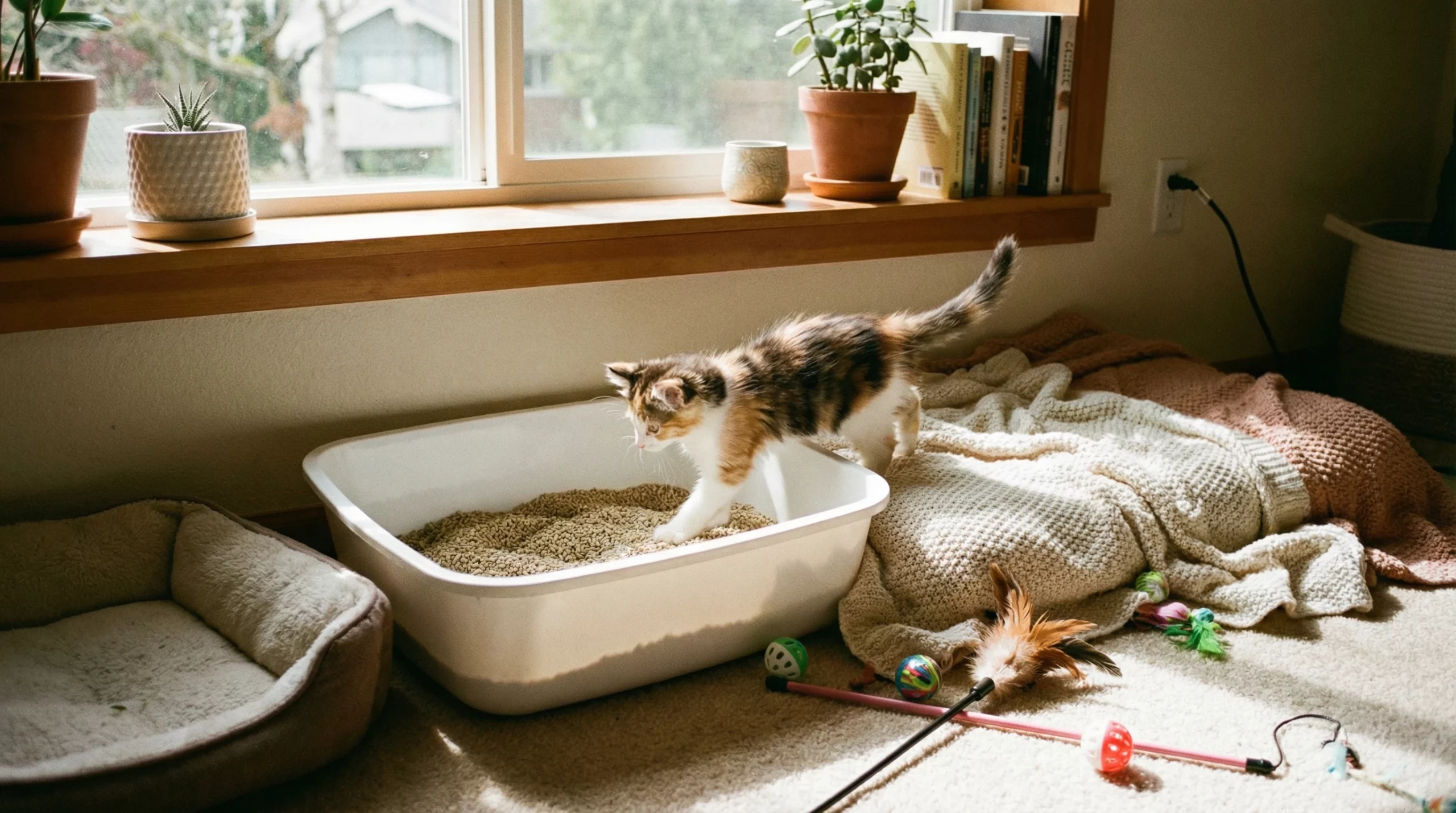
- Shallow Litter Box: Go for something with low sides (about two inches tall), which is easier for tiny legs to climb over. Many kittens feel more confident stepping in and out of a shallow box, making it less intimidating for first timers.
- Unscented, Non-clumping Litter: Kittens are curious and sometimes taste their litter. I always pick non-clumping, unscented options for kittens under 12 weeks. Mineral and paper litters are gentle and safe, and they don’t irritate sensitive kitten paws. If odors are already a concern in your home, choosing the best cat litter for odor control can make litter training smoother and more successful.
- Easy Access Location: The litter box should be close to where the kitten eats and plays, but not right next to food. A quiet, low traffic spot makes the perfect potty classroom. If you live in a multi-story home, put boxes on each floor to make sure kittens can reach them easily.
- Multiple Boxes: If you’re managing more than one kitten, or your house is big, several boxes are a win. A classic tip: one box per kitten, plus one extra. This helps avoid crowding and territorial disputes, letting every kitten have their own space.
- Cleaning Supplies: Scoop daily and wash boxes with mild soap and water once a week. No harsh scents—my feline nose can smell that from far away and it may deter usage. Regular cleaning keeps both kittens and humans happy.
Getting Your Kitten in the Litter Box Routine
Routine is everything for kittens. Most learn where to potty through habit and repetition. I always start with these easy training steps:
- Introduce the Box Early: Show kittens where the box is first thing when they come home. Let them sniff around, dig with their paws, and get a feel for it. Gently place them in after meals, naps, and playtime; these are the moments they’re most likely to need a bathroom break.
- Keep the Box Consistent: Try not to move the box around until you’re sure the kitten knows where it is. Too much change gets pretty confusing during these early weeks.
- Minimize Distractions: A quiet area helps kittens relax and learn. Loud noises or sudden movements can startle them, or even scare them off the box. The calmer the environment, the more likely your kitten feels safe enough to make good habits.
- Praise and Treats: When kittens get it right, I always reward them, either with gentle pets and kind words (yes, I’ll purr for a good box visit) or a small, kitten-safe treat. Positive feedback goes a long way and helps reinforce what you want them to repeat.
Common Litter Training Challenges and Simple Fixes
Even with the best planning, some kittens need extra encouragement. Here’s what I see most often and how I handle it:
- Missing the Box: If a kitten goes near (but not in) the box, double check that it’s easy to reach and not too tall. Try cleaning the box more often, since kittens are picky about cleanliness! Sometimes, just changing the box location a few feet helps, especially if there’s a draft or scary noise nearby.
- Avoiding the Box: If a kitten stops using the box, it may be too dirty, too far away, or next to something scary. Rule out any health issues and move the box to a more inviting, quiet spot if needed. Don’t forget to make sure there aren’t any objects blocking the path! Some common cat diseases and symptoms can first show up as changes in litter box behavior.
- Playing in the Box: Some kittens think the litter box is just another fun sandbox. No worries; redirect them with toys, and they’ll get the message that there’s a time for play and a time for business. Making the litter box less fun by removing toys from nearby helps too.
Box Size and Number Questions
The right box size grows with your kitten. A plastic storage box with low sides works well at first, then upgrade to something roomier as your kitten gets bigger. Multi-cat homes need plenty of boxes spread out to keep everyone happy and stress low (Humane Society has a great guide for box troubleshooting).
Advanced Litter Box Tips for Fast Results
I’ve picked up some smart tricks that help kittens catch on super quickly. Here’s what’s worked for me, time and time again:
Use Kitten Attract Litter or Additives: Some litters are specially designed to draw kittens in with safe scents. This can make a difference for the stubborn or the shy. There are also herbal litter additives you can sprinkle in to give a boost to the effect, making the box more appealing.
Watch for Signs They Need to Go: Kittens usually sniff, look restless, or start scratching when they’re searching for a spot. Scoop them up and gently set them in the box before they find somewhere less convenient, like your bed or a rug. This helps build the right connection quickly.
Keep the Whole Kitten Zone Box Friendly: Anywhere your kitten hangs out should have a box nearby. For really young kittens, set up a playpen or small room with everything they need—bed, food, water, toys, and a litter box within easy reach. Keeping essentials close together prevents confusion and accidents.
Skip the Punishments: Scolding or rubbing a kitten’s nose in accidents only delays learning and can break trust. Clean up mistakes with an enzymatic cleaner to remove all traces, which keeps kittens from returning to the same spot. Creating a safe, encouraging place sets the stage for better habits.
What to Consider Before You Start Training
Litter training moves faster and goes more smoothly when you pay attention to a few important little details:
- Kitten’s Age: Very young kittens may still need stimulation to go (usually done by mom licking their tummies). For bottle babies, you might have to help with a warm, damp cloth until they’re ready for the box. By four to six weeks, most kittens can handle the box alone; just be patient as they adjust.
- Health Needs: If a kitten struggles to use the box, look for tummy issues or signs of discomfort. Sometimes a trip to the vet is the next smart move (VCA Hospitals explains more here). Cleanliness concerns, changes in appetite, or lethargy might mean something more is going on.
- Type of Litter: Fragranced or dusty litter often puts kittens off. Stick to something soft on their paws, unscented, and safe to nibble (because kittens experiment with everything!). Testing a few safe litters can help you find the one your kitten takes to best.
- Household Dynamics: Loud noises, curious dogs, and not enough boxes can make even the calmest kitten hold it in or find other places. Set your kitten up for success with peaceful, accessible potty options in every main room, especially where your kitten tends to nap or play.
Location, Location, Location
Kittens are creatures of habit, so put the litter box in a spot they can always find. Avoid laundry rooms with loud machines or high traffic hallways, and never put the box right next to food and water dishes. Relocating food or water bowls a few feet away can make a big difference for sensitive kittens.
Kitten Litter Box FAQ
These are the top questions other cats (and their people) ask me about training kittens on the box.
How long does it take for a kitten to learn the box?
Most kittens catch on within a week, especially if you keep the setup simple and positive. Every kitten is different, so don’t get discouraged if it takes a little longer.
What if my kitten won’t use the box?
Check for the basics: is the box clean, easy to reach, not too tall, and filled with the right litter? If you’re checking off all these and still having trouble, a vet visit is worth checking out to rule out health problems and to make sure your kitten is healthy overall.
Can I use any kind of litter?
For kittens, unscented, non-clumping is safest until they’re at least 12 weeks old. After that, you can experiment with types your cat likes best. I always stick with what’s gentle on baby paws. If your kitten doesn’t like a certain kind, try another soft, dust-free option.
How many boxes do I need?
Ideally, one box per kitten (plus one extra) makes for happy homes. More boxes are better in big spaces or busy cat households. Sometimes adding an extra box or two solves problems almost overnight.
Quick Reference for Fast Training
- Keep boxes clean and odorfree by scooping daily. Regular cleaning is the best way to encourage use and avoid accidents.
- Show kittens the box after meals, sleep, and play; routine helps them learn and stick to good habits.
- Use treats and gentle praise to reward good box visits. Consistent encouragement builds confidence and trust.
- Set up several boxes in multiple rooms to avoid accidents and let kittens pick their favorite spot.
- If problems pop up, double check your setup and check in with your vet for peace of mind. Health, comfort, and accessibility are key for stressfree training.
With a bit of patience and the right setup, most kittens surprise you with how quickly they master litter box etiquette. Good litter habits pair best with balanced daily care for cats, which supports long-term health and confidence. It doesn’t take magic. Just a few thoughtful steps, a clean box, and lots of positive encouragement from the people and cats who love them. Soon, you’ll have a confident, happy kitten ready to tackle the world—one clean litter box at a time!